


National Gallery of Modern Art


Galería Nacional de Arte Moderno
National Gallery of Modern Art (Jaipur House, Shershah Road, Near Delhi High Court, India Gate, New Delhi, Delhi) — Once the palace of maharaja of Jaipur, this gallery is a repository of the works of all the great modern Indian artists. Here you can find works by Amrita Sher-Gil, Nobel laureate Rabindra Nath Tagore and MF Husain. Admission: Rs. 500 (tourists), Rs. 20 (locals). Free for children (up to 18 years). Hours: 10:00 am – 5:00 pm daily (closed on Mondays and Public Holidays).
Jantar Mantar

Jantar Mantar
Jantar Mantar (Parliament Street, Connaught Place, Delhi) — built by Sawai Jai Singh II, this astronomical observatory is the earliest of the five observatories that were erected by him in different places in India. Built in 1725, it is dominated by a huge sundial and houses other instruments plotting the course of heavenly bodies. Admission: Rs. 100 (tourists), Rs. 5 (locals). Hours: sunrise to sunset.
India Gate

Puerta de la India
India Gate (Rajpath, India Gate, New Delhi, Delhi) — One of the chief attractions of Delhi, India Gate was built as a memorial to commemorate the 70,000 India soldiers who died in World War I. Designed by Sir Edwin Lutyens the monument was completed in 1931.
Feroz Shah Kotla Fort

Fuerte Feroz Shah Kotla
Feroz Shah Kotla Fort (Bahadur Shah Zafar Marg, Vikram Nagar, New Delhi, Delhi) – located off the Bahadur Shah Zafar Marg, this fort is home to the ruins of the palace of the fifth city of Delhi, Ferozabad, built by Firoz Shah of Tughlaq dynasty in 1354. A major highlight of the fort is a 13m-high sandstone Ashokan Pillar which was brought from Punjab by the Tughlaq ruler to be erected here. Admission: Rs. 100 (tourists), Rs. 5 (locals). Hours: sunrise to sunset (daily).
Chattarpur Mandir

Chattarpur Mandir
Chattarpur Mandir (Near Chhatarpur Metro Station, New Delhi, Delhi) — located beyond the Qutab Minar in Mehrauli, the wonderful Chattarpur Mandir is built in South Indian style. Dedicated to Goddess Durga, the temple complex is spread over a large area with beautiful lawns and gardens. A constant hive of activity, the shrine becomes one of the busiest pilgrimage sites during the during the Navratri celebrations. Free admission. Hours: 4:00 am – Midnight (daily).
Birla Mandir / Laxmi Narayan Temple

Templo Birla Mandir
Birla Mandir / Laxmi Narayan Temple (near Gole Market, Mandir Marg, Connaught Place, New Delhi, Delhi) — located on Mandir Marg in central Delhi, the temple was built in 1938 by the prominent Indian industrialist Raja Baldev Das Birla and inaugurated by Mahatma Gandhi. Also known as the Lakshmi Narayan Temple, it is dedicated to Lakshmi, the goddess of wealth and Lord Narayana (Lord Vishnu). Built in Orissan style, the shrine houses a large number of idols of various gods of Indian pantheon. The well-grafted gardens are added attraction. Free admission. Hours: 4:30 am – 1:30 pm and 2:30 pm – 9:00 pm.
Bahai Lotus Temple

Templo Bahai Lotus
Bahai Lotus Temple (Lotus Temple Road, Shambhu Dayal Bagh, Bahapur, New Delhi) — Shaped like the sacred lotus flower, this extraordinary temple is a major highlight of Delhi. Designed by Iranian-Canadian architect Fariburz Sahba in 1986, it is situated at Kalkaji and has 27 immaculate white-marble petals. It is open to the adherents of all faiths who come here to pray or meditate silently according to their own religion. Free admission. Hours: 9:00 am – 5:30 pm (daily)(winter), 9:00 am – 7:00 pm (daily) (Summer). Closed on Mondays.
Amber Fort

Fuerte Amber
Amber Fort (Amer, Jaipur, Rajasthan) – located 4 ½ hours (274 km.) southwest of New Delhi, this is one of the main tourist attractions in the Jaipur area, located high on a hill. Built By Raja Man Singh I, Amber Fort is known for its artistic style, blending both Hindu and Rajput elements. With its large ramparts, series of gates and cobbled paths, the fort overlooks the Maota Lake, at its forefront.
Man Singh began the construction of a fortress-palace of white and red sandstone i.e. Amber Fort in 1592. He was the Kacchwaha (Rajput) of King of Amber, a state later known as Jaipur. Nearby he ordered to set a small temple devoted to ‘Sheela Mata’, his patron goddess. Admission: Rs. 200 (adult tourist), Rs. 25 (adult locals), Rs. 100 (foreign students), Rs. 10 (local students). Hours: 8:00 am – 6:00 pm (daily).
Agra Fort

Fuerte de Agra
Agra Fort (5.5 km from Agra Cantt Railway Station, Rakabganj, Agra, Uttar Pradesh) — located 3 ½ hours (230 km.) southeast of New Delhi, this is an imposing fort on the banks of the river Yamuna, commissioned by Akbar, in 1565 AD. It encloses numerous palaces and houses like the Moti Masjid, Diwan-i-Am, Diwan-i-Khas, Musamman Burj, Jehangiri Mahal, Khaas Mahal, Sheesh Mahal etc. Admission: Rs. 300 (int’l tourists), Rs. 20 (locals). Free admission for children less than 15 years old. Schedule: Sunrise to Sunset. Sound & Light Show. April 1- Sept. 30: English 5:15 pm – 8:15 pm, Hindi 8:30 pm – 9:30 pm; Oct. 1 – March 31: English 7:00 pm – 8:00 pm, Hindi 8:15 pm – 9:15 pm. m.
About India
India
This South Asian country, which is one of the most populous in the planet (at 1.25 billion people) has a rich history that goes back thousands of years, such as the Indus civilization – which existed the same time as Ancient Egypt and Sumer, but lasted far longer. India is also home of the Buddhist & Hindu religions, as well as having a significant population of Muslims. There are also followers of the Sikh religion, as well as Christianity in that country.
During India’s Medieval period, the Gupta dynasty was the greatest to rule in the north after the Mauryas, heralding a period known as the ‘Golden Age of India’. This, while in the southern part of India several different empires –the Cholas, the Pandyas and the Cheras — spread and grew, trading with Europe and other parts of Asia till the end of the 1100s.
During the 16th century, the Mughals came from Central Asia and soon held sway over most of the northern parts of the Indian subcontinent. Mughal rulers introduced Central Asian art and architecture to India. In addition to the Mughals and various Rajput kingdoms, several independent Hindu states, such as the Vijayanagara Empire, the Maratha Empire, and the Ahom Kingdom, flourished simultaneously in southern, western, and north-eastern India, respectively. The Mughal Empire suffered a gradual decline in the early 18th century, which provided opportunities for the Afghans, Balochis, Sikhs, and Marathas to exercise control over large areas in the northwest of the subcontinent until the British East India Company gained ascendancy over South Asia.
The British ruled over India from 1858 to 1947, when the country finally gained independence. This occurred after a long freedom struggle led largely by the Indian National Congress and its visionary leaders, especially, Mahatma Gandhi. From 1920, the freedom movement leaders began highly popular mass campaign against the British Raj using largely peaceful methods. India’s acquisition of independence resulted in the formation of two countries, India and Pakistan. Following the controversial partition of India, rioting broke out, leaving some 500,000 dead. Also, this period saw one of the largest mass migrations ever recorded in modern history, with a total of 12 million Hindus, Sikhs and Muslims moving between the newly created nations of India and Pakistan.
Despite pressing problems, such as significant overpopulation, environmental degradation, widespread poverty, and corruption, economic growth – following the launch of economic reforms in 1991, and a massive youthful population, are driving India’s emergence as a regional & global power. Due to its population, India is reputed to be the largest democracy in the world.
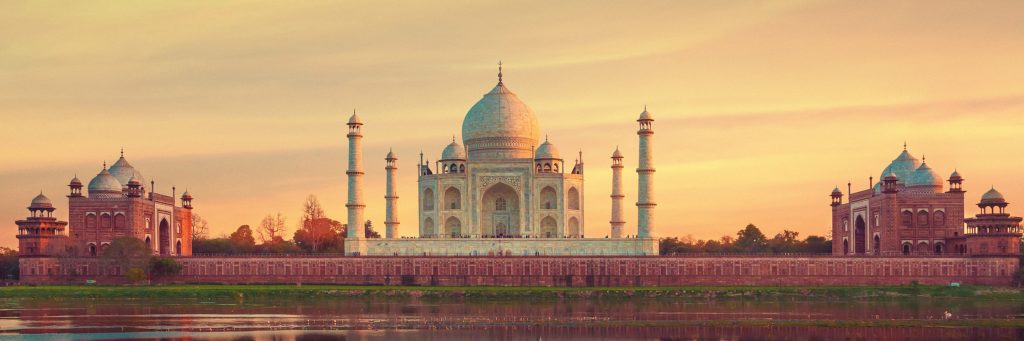
Tourism in India is a work in progress, contributing around 6.77% to the country’s total GDP. In 2013, India attracted nearby 6.9 million visitors. That number is dwarfed by China (which attracted 129 million in 2013). The Indian government needs to educate foreigners on things to see and do in the country beyond seeing the Taj Mahal.


